
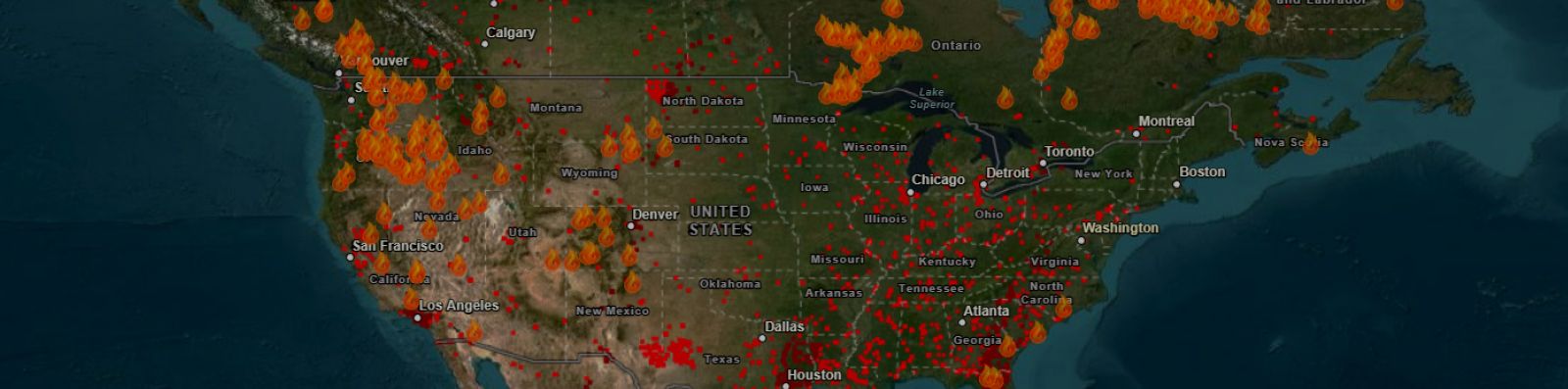
As of late July 2026, Canada and the United States are facing a particularly intense peak of the fire season, while Mexico — whose fire calendar is tied to its winter and spring dry season — has already officially closed its campaign for the year.
The situation, in brief
- Canada is at National Preparedness Level 4 (CIFFC) — the second-highest level — with more than 850 active fires and the most serious front in northwestern Ontario, where a single fire has already burned over 300,000 hectares and remains out of control. Smoke from the Canadian fires has degraded air quality as far away as Toronto, Boston and New York, a reminder that these emergencies don't stop at a border.
- The United States has dozens of large fires active, concentrated mainly in Oregon, Washington, Utah, Colorado and California, at the height of the summer fire season. (NIFC)
- Mexico has closed its 2026 season as one of the years with the least area affected since 2015, thanks in part to sustained prevention work over recent years. (SATIF)
Why prevention is worth more than any air tanker
A fire that exceeds available extinguishing capacity stops being a tactical problem and becomes a matter of time and luck: crews have to wait for the wind, humidity, or fuel availability to change before they can act safely. That's why the most advanced forest management systems — in both Canada and the United States — agree on the same principle: the earlier fuel is managed, the less ground crews need to be exposed to a front that's already out of control.
Planned fuel reduction, prescribed burns carried out outside the risk season, early surveillance in wildland-urban interface areas, and coordination between federal, state and provincial agencies don't eliminate fire risk — but they do determine whether the next heatwave turns into a controlled spark or an emergency that forces the evacuation of entire communities and the deployment of resources from the other end of the continent.
A thank-you to those on the ground
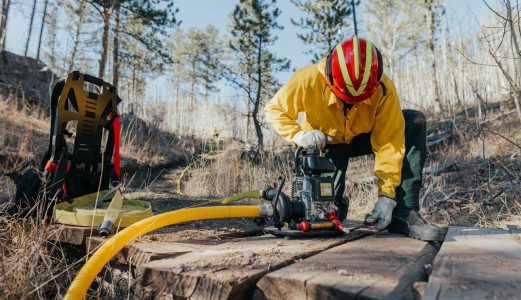
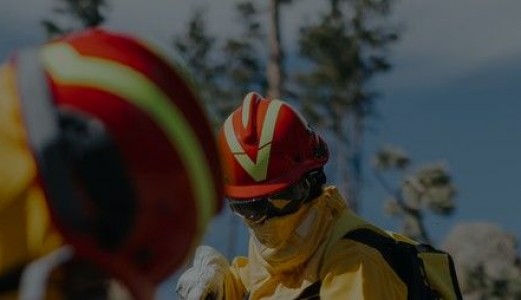
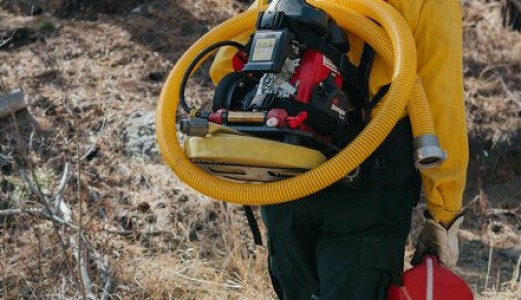
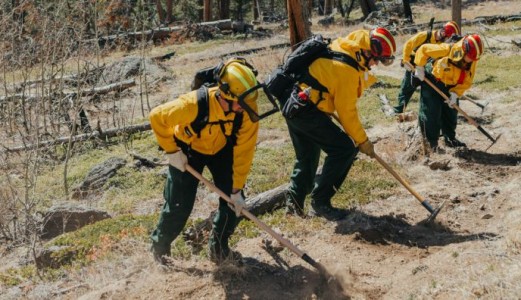
Behind the season's figures lies an enormous human effort: thousands of wildland firefighters, ground suppression crews, helicopter and air tanker crews, and incident management teams working exhausting shifts in extreme heat and constant smoke. The sheer scale of the response — hundreds of vehicles, dozens of aircraft, and management teams deployed simultaneously across different states and provinces — shows just how much this work depends on coordination between agencies, and on the physical and mental endurance of those on the front line.
That work deserves consistent recognition, not only in the moments that draw the most media attention.
Record heat, longer seasons
The underlying pattern is the same one seen elsewhere on the planet: temperatures above the expected average through the end of August, dry conditions favouring rapid fire spread, and a sustained trend toward longer, more intense fire seasons year after year. The historical comparison is clear: the most extreme years of the last decade in Canada have burned several times the area of a season that would have been considered “normal” just fifteen years ago.
That underlying climate context is precisely why prevention — not just the capacity to respond once a fire is already active — has become the variable that really decides how each season ends.
Overview updated as of 27 July 2026, based on data from the Canadian Interagency Forest Fire Centre (CIFFC), the U.S. National Interagency Fire Center (NIFC), and Mexico's Comisión Nacional Forestal (Conafor) together with the Sistema de Alerta Temprana de Incendios Forestales (SATIF). The situation is evolving day by day.